Cine s-a căsătorit cu Catherine Howard?
Henry VIII of England este căsătorit Catherine Howard pe . Henry VIII of England avea 49 de ani în ziua nunții (49 ani, 1 luni și 0 zile).
Căsătoria a durat 1 ani, 6 luni și 16 zile (565 zile). Căsătoria s-a încheiat la .
Catherine Howard: Cronologie privind starea căsătoriei
1 Pixel = 1 Month

Catherine Howard

Catherine Howard (c. 1523 – 13 februarie 1542), a fost cea de-a cincea soție a regelui Henric al VIII-lea al Angliei. S-a născut în cea mai renumită familie nobilă a Angliei, tatăl său fiind fratele mai mic al Ducelui de Norfolk. Catherine era și verișoară cu Anne Boleyn.
După divorțul de Anne de Cleves, Henric al VIII-lea al Angliei își căuta o nouă soție. În 1540, pe când el avea 49 de ani, i-a cerut mâna lui Catherine, care avea 17 ani. La acel moment, Henric o descria ca pe "un trandafir fără ghimpi".
În felul acesta, Catherine Howard a devenit a cincea soție a lui Henric al VIII-lea al Angliei.
Dar diferența de vârstă de 34 de ani și-a spus cuvântul. Catherine a săvârșit un adulter cu Thomas Culpepper, fapt descoperit curând și pedepsit fără milă.
Culpepper a fost executat în decembrie 1541, ca și Francis Dereham, un iubit anterior al lui Catherine. În februarie 1542 a fost executată și Catherine Howard, la vârsta de numai 19 ani, împreună cu Jane Boleyn, văduva fratelui executat a lui Anne Boleyn. Conform folclorului popular, ultimele sale cuvinte ar fi fost:
, deși nu există martori oculari care să ateste aceasta. După doar un an de la aceste evenimente, Henric se căsătorește cu ultima sa soție, Catherine Parr.
Citește mai mult...
Henry VIII of England
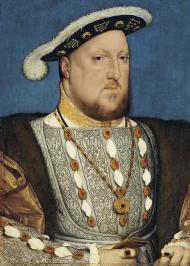
Henry VIII (28 June 1491 – 28 January 1547) was King of England from 22 April 1509 until his death in 1547. Henry was a dominant and forceful monarch. He is known for his six marriages and his efforts to have his first marriage, to Catherine of Aragon, annulled. His disagreement with Pope Clement VII about such an annulment led Henry to initiate the English Reformation, separating the Church of England from papal authority. He appointed himself Supreme Head of the Church of England and dissolved convents and monasteries, for which he was excommunicated by the pope.
Born in Greenwich, Henry brought radical changes to the Constitution of England, expanding royal power and ushering in the theory of the divine right of kings in opposition to papal supremacy. He frequently used charges of treason and heresy to quell dissent, and those accused were often executed without a formal trial using bills of attainder. He achieved many of his political aims through his chief ministers, some of whom were banished or executed when they fell out of his favour. Thomas Wolsey, Thomas More, Thomas Cromwell, and Thomas Cranmer all figured prominently in his administration.
Henry was an extravagant spender, using proceeds from the dissolution of the monasteries and acts of the Reformation Parliament. He converted money that was formerly paid to Rome into royal revenue. Despite the money from these sources, he was often on the verge of financial ruin due to personal extravagance and costly and largely unproductive wars, particularly with King Francis I of France, Charles V, Holy Roman Emperor, King James V of Scotland, and the Scottish regency under the Earl of Arran and Mary of Guise. He founded the Royal Navy, oversaw the annexation of Wales to England with the Laws in Wales Acts 1535 and 1542, and was the first English monarch to rule as King of Ireland following the Crown of Ireland Act 1542.
Henry's contemporaries considered him an attractive, educated, and accomplished king. He has been described as "one of the most charismatic rulers to sit on the English throne" and his reign described as the "most important" in English history. He was an author and composer. As he aged, he became severely overweight and his health suffered, and was frequently characterised in his later life as a lustful, egotistical, paranoid, and tyrannical monarch. He longed for a son and heir, which he finally received from his third marriage to Jane Seymour. Jane's son succeeded Henry as Edward VI. Nonetheless, his daughters by his first and second wives acceded to the throne in turn as Mary I and Elizabeth I.
Citește mai mult...