Cine s-a căsătorit cu Abdul Hamid II?
Sazkar Hanım este căsătorit Abdul Hamid II . Diferența de vârstă a fost de 30 ani, 7 luni și 17 zile.
Saliha Naciye Kadın este căsătorit Abdul Hamid II .
Bedrifelek Kadın este căsătorit Abdul Hamid II . Diferența de vârstă a fost de 8 ani, 3 luni și 14 zile.
Mezidemestan Kadın este căsătorit Abdul Hamid II . Diferența de vârstă a fost de 26 ani, 5 luni și 10 zile.
Bidar Kadın este căsătorit Abdul Hamid II . Diferența de vârstă a fost de 12 ani, 7 luni și 14 zile.
Behice Hanım este căsătorit Abdul Hamid II . Diferența de vârstă a fost de 40 ani, 0 luni și 19 zile.
Nurefsun Kadın este căsătorit Abdul Hamid II .
Fatma Pesend Hanım este căsătorit Abdul Hamid II . Diferența de vârstă a fost de 33 ani, 6 luni și 27 zile.
Emsalinur Kadın este căsătorit Abdul Hamid II . Diferența de vârstă a fost de 23 ani, 3 luni și 12 zile.
Azize Dilpesend Kadın este căsătorit Abdul Hamid II . Diferența de vârstă a fost de 18 ani, 3 luni și 26 zile.
Peyveste Hanım este căsătorit Abdul Hamid II . Diferența de vârstă a fost de 30 ani, 7 luni și 19 zile.
Müşfika Kadınefendi este căsătorit Abdul Hamid II . Diferența de vârstă a fost de 25 ani, 2 luni și 19 zile.
Mediha Nazikeda Kadın este căsătorit Abdul Hamid II .
Abdul Hamid II

Abdülhamid II or Abdul Hamid II (Ottoman Turkish: عبد الحميد ثانی, romanized: Abd ul-Hamid-i s̱ānī; Turkish: II. Abdülhamid; 21 September 1842 – 10 February 1918) was the 34th sultan of the Ottoman Empire, from 1876 to 1909, and the last sultan to exert effective control over the fracturing state. He oversaw a period of decline with rebellions (particularly in the Balkans), and presided over an unsuccessful war with the Russian Empire (1877–78), the loss of Egypt, Cyprus, Bulgaria, Serbia, Montenegro, Tunisia, and Thessaly from Ottoman control (1877–1882), followed by a successful war against Greece in 1897, though Ottoman gains were tempered by subsequent Western European intervention.
Elevated to power in the wake of Young Ottoman coups, he promulgated the Ottoman Empire's first constitution, a sign of the progressive thinking that marked his early rule. But his enthronement came in the context of the Great Eastern Crisis, which began with the Empire's default on its loans, uprisings by Christian Balkan minorities, and a war with the Russian Empire. At the end of the crisis, Ottoman rule in the Balkans and its international prestige were severely diminished, and the Empire lost its economic sovereignty as its finances came under the control of the Great Powers through the Ottoman Public Debt Administration.
In 1878, Abdul Hamid consolidated his rule by suspending both the constitution and the parliament, purging the Young Ottomans, and curtailing the power of the Sublime Porte. He ruled as an autocrat for three decades. Ideologically an Islamist, the sultan asserted his title of Caliph to Muslims around the world. His paranoia about being overthrown, like his uncle and half-brother, led to the creation of secret police organizations, such as the Yıldız Intelligence Agency and the Umur-u Hafiye, and a censorship regime. The Ottoman Empire's modernization and centralization continued during his reign, including reform of the bureaucracy, extension of the Rumelia Railway and the Anatolia Railway, and construction of the Baghdad Railway and the Hejaz Railway with German assistance. Systems for population registration, sedentarization of tribal groups, and control over the press were part of a unique imperialist system in fringe provinces known as borrowed colonialism. The farthest-reaching reforms were in education through the establishment of many professional schools and a network of primary, secondary, and military schools throughout the Empire.
Ironically, the same educational institutions that the Sultan sponsored proved to be his downfall. Large sections of the Ottoman intelligentsia were discontent with his repressive policies, which coalesced into the Young Turks movement. Ethnic minorities started organizing their own national liberation movements, resulting in insurgencies in Macedonia and Eastern Anatolia. Armenians especially suffered from massacres and pogroms at the hands of the Hamidiye regiments. Of the many assassination attempts during Abdul Hamid's reign, one of the most famous is the Armenian Revolutionary Federation's Yıldız assassination attempt of 1905. In 1908, the Committee of Union and Progress forced him to recall parliament and reinstate the constitution in the Young Turk Revolution. Abdul Hamid II attempted to reassert his absolutism a year later, resulting in his deposition by pro-constitutionalist forces in the 31 March incident, though the role he played in these events is disputed.
Abdul Hamid has been long vilified as a reactionary "Red Sultan" for his tyrannical leadership and condoning of atrocities. It was initial consensus that his personal rule created an era of stagnation which held the Ottoman Empire back from the otherwise dynamic Belle Époque. Recent assessments have highlighted his promotion of education and public works projects, his reign a culmination and advancement of the Tanzimat reforms. Since the AKP's rise to power, scholars have attributed a resurgence in his personality cult an attempt to check Mustafa Kemal Atatürk's established image as the founder of modern Turkey.
Citește mai mult...
Sazkar Hanım

Sazkar Hanım (Ottoman Turkish: سازکار خانم, "harmony"; born Fatma Zekiye Maan; 8 May 1873 – c. 1945) was the ninth consort of Sultan Abdul Hamid II of the Ottoman Empire.
Citește mai mult...Abdul Hamid II
Saliha Naciye Kadın

Saliha Naciye Kadın (Ottoman Turkish: صالحه ناجیه قادین, "the devout one" and "saved and freed"; born Zeliha Ankuap; c. 1887 – c. 1923) was the last consort of Sultan Abdul Hamid II of the Ottoman Empire.
Citește mai mult...Abdul Hamid II
Bedrifelek Kadın

Бедрифеле́к Кады́н-эфе́нди (тур. Bedrifelek Kadın Efendi; 4 января 1851, Анапа или Поти — 6 февраля 1930, Стамбул) — главная жена (башкадын-эфенди) османского султана Абдул-Хамида II и мать троих его детей.
Citește mai mult...Abdul Hamid II
Mezidemestan Kadın
Mezidemestan Kadın (Ottoman Turkish: مزیدمستان قادین, "merry woman", also Mezide Kadın; born Kadriye Kamile Merve Mikanba; 3 March 1869 – 21 January 1909) was the sixth consort of Sultan Abdul Hamid II of the Ottoman Empire.
Citește mai mult...Abdul Hamid II
Bidar Kadın

بیدار قادین (5 مايو 1858 – 1 يناير 1918) (بالتركية العثمانية: بیدار قادین) هي زوجة للسلطان العثماني عبد الحميد الثاني.
Citește mai mult...Abdul Hamid II
Behice Hanım
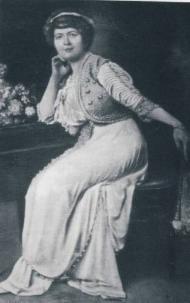
Бехидже́ Ханы́м-эфе́нди (тур. Behice Hanım Efendi), также Бехиче-ханум (10 октября 1882, Адапазары — 22 октября 1969, Стамбул) — четвёртая жена (икбал) османского султана Абдул-Хамида II и мать двух его сыновей.
Citește mai mult...Abdul Hamid II
Nurefsun Kadın
Ayşe Safinaz Nurefsun Kadın (Ottoman Turkish: نورافسون قادین; "womanly", "the pure one" and "light charm"; c. 1850 – c. 1915), called also Nurefzun Kadın, was the second consort of Sultan Abdul Hamid II of the Ottoman Empire.
Citește mai mult...Abdul Hamid II
Fatma Pesend Hanım

Prinzessin Fatma Pesend Achba-Anchabadze (* 17. April 1876 in Istanbul; † 5. November 1924 ebenda) war die 11. Gemahlin von Sultan Abdülhamid II.
Citește mai mult...Abdul Hamid II
Emsalinur Kadın

Emsalinur Kadın (Ottoman Turkish: امثال نور قادین; "exemplary light"; 2 January 1866 – c. 1952; after the Surname Law of 1934: Emsalinur Kaya) was the seventh consort of Sultan Abdul Hamid II of the Ottoman Empire.
Citește mai mult...Abdul Hamid II
Azize Dilpesend Kadın
Azize Dilpesend Kadın (Ottoman Turkish: دل پسند قادین; "Highly Esteemed" and "likeable to heart"; 16 January 1865 – 17 June 1901) was the fifth consort of Sultan Abdul Hamid II of the Ottoman Empire.
Citește mai mult...Abdul Hamid II
Peyveste Hanım

Peyveste Hanım (Ottoman Turkish: پیوسته خانم; "chatty"; born Princess Hatice Rabia Emuhvari; 10 May 1873 – c. 1943) was a consort of Sultan Abdul Hamid II of the Ottoman Empire.
Citește mai mult...Abdul Hamid II
Müşfika Kadınefendi

Destizer Müşfika Kadın (Turkish pronunciation: [myʃfikʰa kʰadɯn]; Ottoman Turkish: مشفقه قادين; meaning "the compassionate one"; born Ayşe Ağır; c. 1872 – 18 July 1961; after the Surname Law of 1934: Müşfika Kayısoy) was the eighth consort of Sultan Abdul Hamid II of the Ottoman Empire.
Citește mai mult...Abdul Hamid II
Mediha Nazikeda Kadın
Nazikeda Kadın (Turkish pronunciation: [nazik̟ʰeda kʰadɯn]; Ottoman Turkish: نازك ادا قادین; born Mediha Tsanba; c. 1848 – 11 April 1895; meaning 'One of delicate manners') was the first consort and chief consort (BaşKadin) of Sultan Abdul Hamid II of the Ottoman Empire.
Citește mai mult...