Cine s-a căsătorit cu Maria a II-a a Angliei?
William III of England este căsătorit Maria a II-a a Angliei pe . Mary II of England avea 15 de ani în ziua nunții (15 ani, 5 luni și 25 zile). William III of England avea 26 de ani în ziua nunții (26 ani, 11 luni și 21 zile). Diferența de vârstă a fost de 11 ani, 5 luni și 26 zile.
Maria a II-a a Angliei: Cronologie privind starea căsătoriei
1 Pixel = 1 Month

Maria a II-a a Angliei
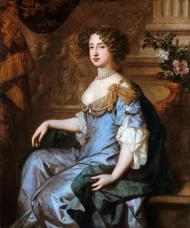
Maria a II-a a Angliei (n. , Greater London, Anglia, Regatul Unit – d. , Middlesex, Anglia, Regatul Unit) a domnit ca regină a Angliei și a Irlandei din 13 februarie 1689 și ca regină a Scoției din 11 aprilie 1689 până la moartea sa.
Maria s-a născut la palatul St. James din Londra ca cea mai mare fiică a lui Iacob, Duce de York (viitorul rege Iacob al II-lea al Angliei) și a primei lui soții, Lady Anne Hyde. Unchiul Mariei a fost regele Carol al II-lea al Angliei.
Citește mai mult...
William III of England

William III and II (William Henry; Dutch: Willem Hendrik; 4 November 1650 – 8 March 1702), also known as William of Orange, was the sovereign Prince of Orange from birth, Stadtholder of Holland, Zeeland, Utrecht, Guelders, and Overijssel in the Dutch Republic from 1672, and King of England, Ireland, and Scotland from 1689 until his death in 1702. He ruled England, Scotland, and Ireland with his wife, Queen Mary II, and their joint reign is known as that of William and Mary.
William was the only child of William II, Prince of Orange, and Mary, Princess Royal, the daughter of King Charles I of England, Scotland, and Ireland. His father died before his birth, making William III the prince of Orange from birth. In 1677, he married his first cousin Mary, the elder daughter of his maternal uncle James, Duke of York (later King James II).
When the Catholic French king Louis XIV attacked the Dutch Republic in 1672, William rose to power and became Louis's greatest obstacle. He made it his life's mission to oppose Louis and waged many campaigns against Louis's armies. Many Protestants heralded William as a champion of their faith. In 1685, his Catholic uncle and father-in-law, James, became king of England, Scotland, and Ireland. James's reign was unpopular with British Protestants, who opposed Catholic Emancipation. Supported by a group of influential English political and religious leaders, William invaded England in the Glorious Revolution. In 1688, he landed at the south-western English port of Brixham; James was deposed shortly afterward.
William's reputation as a staunch Protestant enabled him and his wife to take power. During the early years of his reign, William was occupied abroad with the Nine Years' War (1688–1697), leaving Mary to govern the three kingdoms alone. She died in 1694. In 1696 the Jacobites, a faction loyal to the deposed James, plotted unsuccessfully to assassinate William and restore James to the throne. In Scotland, William's role in ordering the Massacre of Glencoe remains notorious. William's lack of children and the death in 1700 of his nephew the Duke of Gloucester threatened the Protestant succession. The danger was averted by placing William and Mary's cousins, the Protestant House of Hanover, in line to the throne after Mary's sister Anne with the Act of Settlement 1701. Upon his death in 1702, William was succeeded in his kingdoms by Anne and as titular Prince of Orange by his cousin John William Friso.
Citește mai mult...